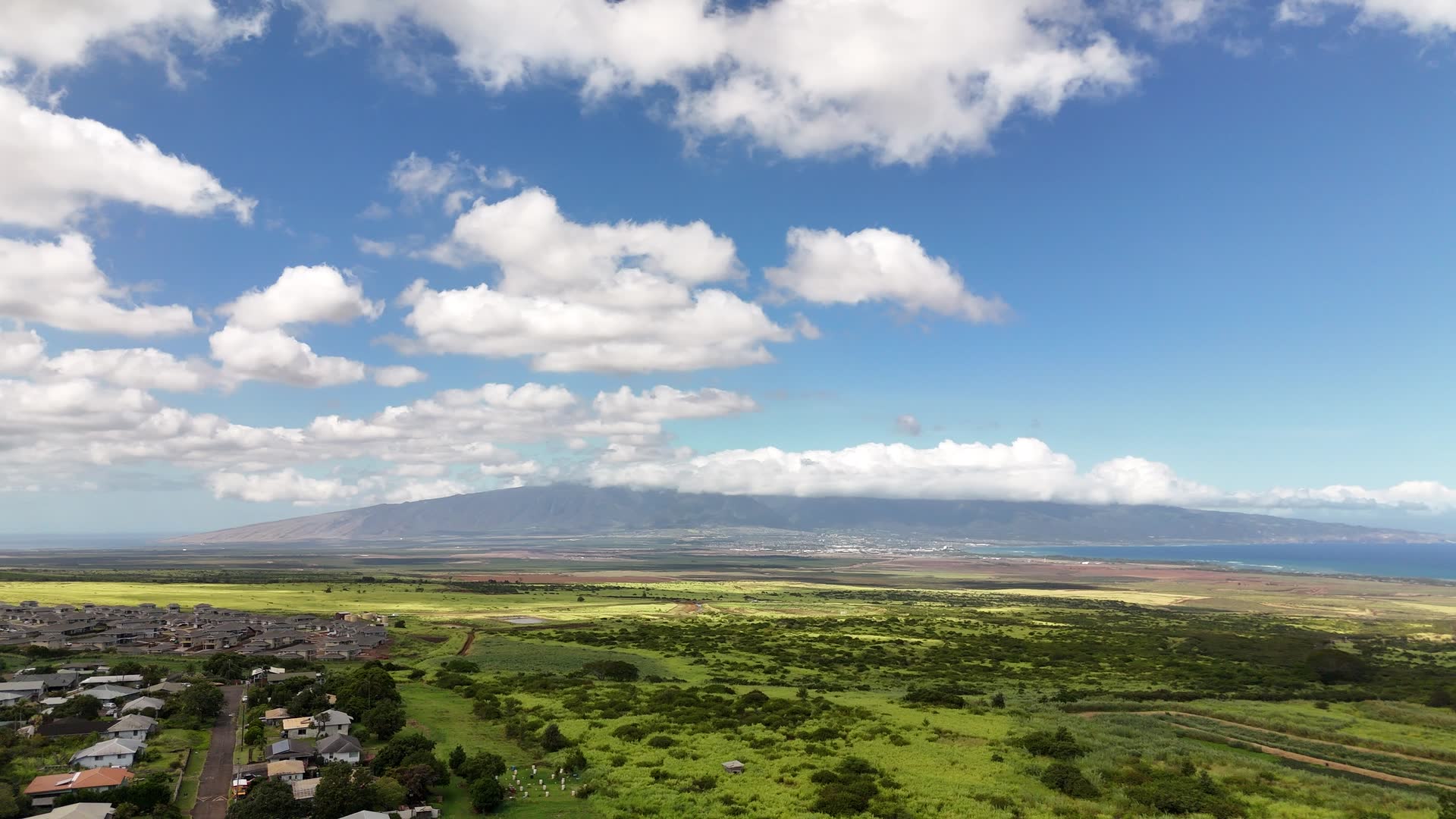

A lot of people picture Maui as beaches and palm trees, and then they drive up the slopes of Haleakala and find something completely different: rolling pastures, eucalyptus and jacaranda, cool evenings, and views that stretch across the whole island. That is Upcountry Maui, and it is one of my favorite parts of the island to show buyers. I used to live in Makawao, and I still have family up here, so between visiting them and work, I spend a lot of time Upcountry.
This guide compares the three Upcountry communities I get asked about most: Kula, Makawao, and Pukalani. If you are still deciding whether a move to Maui makes sense, start with my guide, Moving to Maui: What You Need to Know Before Buying a Home.
What Is It Like Living in Upcountry Maui?
Upcountry Maui covers the communities on the lower and middle slopes of Haleakala, above the central valley. Pukalani sits around 1,500 feet, Makawao a little higher, and much of Kula climbs from roughly 1,600 feet to over 3,500 feet. That elevation is the big story. It brings cooler temperatures, green hillsides, and long views down to the ocean and across to the West Maui Mountains.

The area has deep agricultural and ranching roots. Cattle ranches, small farms, and flower and vegetable growers still shape the landscape, and Makawao’s paniolo, or Hawaiian cowboy, heritage is a source of real community pride.
Daily life feels more like a rural mountain community than a resort area. People garden, keep animals, drive down the hill for work and errands, and come back up to cooler air in the evening. Kahului is the main shopping and service hub, and getting to the beach means a drive down the mountain. For a lot of buyers, that trade is worth it.
Upcountry also includes smaller communities such as Olinda, Haliimaile, Keokea, and Ulupalakua, each with its own feel. This guide focuses on Kula, Makawao, and Pukalani, since that is where most buyers start their search.
Makawao: Small-Town Charm and Convenience
Makawao Maui is the Upcountry town with the most personality. Its main streets are lined with galleries, boutiques, cafes, and restaurants, and the town still leans into its ranching history. Every summer the Makawao Parade rolls down Baldwin and Makawao Avenues, and the Makawao Stampede rodeo is held around the Fourth of July at the Oskie Rice Arena.

A few local landmarks give the town its character. Komoda Store and Bakery traces its roots to 1916 and is a longtime local favorite. Just outside town, the Hui No’eau Visual Arts Center operates on the historic Kaluanui estate, built in 1917, with classes, exhibits, and events throughout the year.
Residential areas around Makawao range from homes close to town to properties on larger lots in the surrounding hills. Baldwin Avenue connects Makawao down to Paia on the North Shore, and Pukalani and Kula are a short drive away, so it works well as a central Upcountry base. Above town, the road climbs toward Olinda, where it gets cooler, wetter, and more forested. You can browse current listings on my Makawao real estate page.
Kula: Open Space, Views, and Cooler Weather
Kula Maui stretches along the western slopes of Haleakala, and it is where Upcountry feels the most open. Homes sit on a wide range of lot sizes, many with sweeping views over the isthmus to the West Maui Mountains and the ocean on both sides.

Farther south along Kula Highway, Keokea has a quiet country feel, with Grandma’s Coffee House as a longtime gathering spot. Agriculture is part of Kula’s identity. Lower Kula is known for Maui onions, and the area grows much of Hawaii’s protea along with vegetables, lavender, and flowers. Many properties are agricultural lots, which can mean space for gardens, orchards, or animals, along with rules about how the land is used.
Living here takes some planning. Higher elevations get cool, especially at night, and conditions can change quickly from sun to fog. Larger lots mean more mowing, fencing, and upkeep, and some homes are on long driveways or private roads. Water, wastewater, and wildfire preparedness are all important topics in Kula, and I cover them in the buying section below. To see what is available now, visit my Kula homes for sale page.
Pukalani: Residential Living and Everyday Convenience
Pukalani Maui is the most suburban of the three. Its name is often translated as “opening in the heavens,” and it sits at around 1,500 feet, which keeps it a bit cooler than the central valley while staying close to Kahului.

Most of Pukalani is made up of residential neighborhoods with single-family homes, many on standard-sized lots. Everyday errands are easy, with a Foodland, Pukalani Terrace Center, and the Kulamalu Town Center nearby. The 18-hole Pukalani Country Club golf course sits in the middle of town and allows public play.
Pukalani tends to fit buyers who want the Upcountry climate without managing acreage, and who value a shorter drive to Kahului’s shopping, the airport, and services. Because many homes sit on smaller lots, upkeep is usually more manageable than on Kula acreage, although the same questions about roofs, drainage, water, and insurance still apply. You can see current listings on my Pukalani real estate page.
Kula vs. Makawao vs. Pukalani: Which Fits Your Lifestyle?
Here is a side-by-side look. These are general patterns, and individual neighborhoods and properties vary.
| Kula | Makawao | Pukalani | |
|---|---|---|---|
| Housing | Homes on larger lots and agricultural properties | Homes near town plus properties on larger lots in the hills | Mostly single-family homes in established neighborhoods |
| Weather | Coolest, especially at higher elevations | Mild to cool, with more rain on the wetter side of town | Mild and a bit drier, cooler than the valley |
| Convenience | Farthest from Kahului; a car is needed | Walkable town center; short drive to Pukalani and Paia | Closest to Kahului, with groceries and services in town |
| Land | Most space, often agricultural | A mix of town lots and acreage | Mostly standard residential lots |
| Lifestyle | Rural, open, and view focused | Small-town and creative, with ranching roots | Residential and practical, with golf and easy errands |
If you want land and views, start in Kula. If you want a town with character, look at Makawao. If you want easy errands and a simpler home to maintain, Pukalani is worth a close look.
Upcountry Maui Weather and Microclimates
Weather in Upcountry Maui changes with elevation and with which side of the mountain you are on. A few miles can feel like a different climate.
- Temperature. Every step up the mountain gets cooler. Pukalani feels mild, while upper Kula can be chilly at night, and many homes up there have fireplaces or heaters.
- Rainfall. Areas facing the trade winds, including parts of Makawao, tend to be wetter and greener. Kula, on the leeward side, is generally drier. Drought affects Upcountry too, and the county has issued water shortage restrictions for the Upcountry system in recent years.
- Fog and clouds. Afternoon clouds often settle over the slopes, especially at higher elevations.
- Wind. Gusty winds can sweep across exposed slopes, which matters for roofs, landscaping, and fire risk.

These conditions affect maintenance. Damp areas need attention to mold, drainage, and wood. Drier areas need water planning and vegetation management. Spend time in a neighborhood at different times of day before you decide, and budget for upkeep that fits the location.
Things to Do in Upcountry Maui
For residents, Upcountry life is less about attractions and more about routines. A few favorites:
- Upcountry Farmers Market. Saturday mornings at Kulamalu Town Center, with local produce, flowers, and food.
- Makawao town. Galleries, coffee, and dinner close to home, plus classes and events at Hui No’eau.
- Outdoor recreation. Haleakala National Park is reached through Kula, and Polipoli Spring State Recreation Area offers forest trails high on the mountain.
- Farms and gardens. Kula Botanical Garden, Ali’i Kula Lavender, and Surfing Goat Dairy are local favorites, especially when you have guests in town.
- History and community. Kula’s octagonal Holy Ghost Church, built by Portuguese immigrants in the 1890s, and community events like the Makawao Parade connect you to the area’s roots.
- Golf. Pukalani Country Club is right in town.

Buying Real Estate in Upcountry Maui
Upcountry Maui homes for sale often come with details you would not see in a typical suburban purchase. These are the topics I walk clients through:
- Agricultural zoning. Many Upcountry properties are in the county’s agricultural district. Homes there are generally treated as farm dwellings, and owners file an agricultural declaration stating how the land is used. That obligation carries over to a new buyer, so understand it before you buy. Confirm details with the County of Maui Department of Planning.
- Water meters. Water is one of the biggest Upcountry issues. The county’s Upcountry water meter list stopped taking new applications in 2013, and roughly 1,400 applicants are still waiting. A lot without a meter may not get one soon, so confirm the water source for any property. Upcountry has also seen drought-related water restrictions.
- Private roads. Some homes are reached by private or shared roads. Find out who maintains them and how costs are shared.
- Septic and cesspools. Most Upcountry homes are not on county sewer. Hawaii law requires cesspools to be upgraded or connected to sewer by 2050, and new systems need Department of Health approval. Ask what system a home has and its condition.
- Wildfire exposure. In August 2023, wildfires in Olinda and Kula burned more than 1,200 acres and destroyed about two dozen homes. Ask about defensible space around the house, vegetation, roofing, and access roads.
- Insurance. Get quotes early. Some insurers have pulled back in wildfire-prone areas, and in Hawaii, hurricane coverage is often a separate policy from standard homeowners insurance.
- Inspections. Look closely at roofs, drainage, termites, water systems, and wastewater. My construction background helps me spot things worth a second look.
- Financing. Agricultural land, private water, and unpermitted structures can all affect loan options. Talk with a lender who knows Maui early.
Short-term rental rules on Maui vary by zoning and are changing, so never buy based on assumed rental income.
Frequently Asked Questions About Living in Upcountry Maui
Where is Upcountry Maui?
Upcountry Maui refers to the communities on the slopes of Haleakala above the central valley, including Kula, Makawao, Pukalani, and nearby areas such as Olinda and Keokea.
Is Upcountry Maui cold?
It is cooler than the coast. Pukalani is mild, while upper Kula can get chilly at night, especially in winter. A warm layer and sometimes a heater come in handy.
Which is better, Kula or Makawao?
It depends on what you want. Kula offers more land, cooler weather, and big views. Makawao offers a walkable town center with shops, restaurants, and community events.
Can I get a new water meter in Upcountry Maui?
It can be difficult. The county’s Upcountry meter list closed to new applications in 2013 and has a long backlog, so confirm a property’s water source before you buy.
Is wildfire a concern in Upcountry Maui?
Yes. Upcountry experienced destructive fires in 2023. Look at defensible space, access roads, and insurance availability for any property you consider.
Can I build or farm on agricultural land Upcountry?
Agricultural land comes with county rules about dwellings and land use. Check zoning and permits with the County of Maui before you make plans.
Explore Upcountry Maui Real Estate
Upcountry Maui offers something different from the rest of the island: cooler air, open space, and a strong sense of community. Whether you are drawn to Kula’s views, Makawao’s town life, or Pukalani’s convenience, start with my Upcountry Maui real estate page, or search every active listing on Maui.
If you want to talk through Kula vs. Makawao vs. Pukalani for your situation, reach out. I am happy to help you find the right fit.